Last updated: 14.07.2026. Author: toprate.co.za
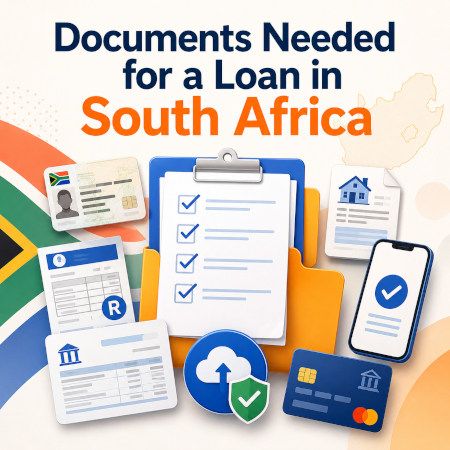 Table of Contents
The documents needed for a loan depend on the lender, loan type and how you earn your income. Most applicants need a South African ID, proof of income and an active bank account. Some lenders also request recent bank statements, proof of address and employment information.
Submitting every document does not guarantee approval. The lender must still confirm your identity, assess your credit profile and determine whether you can afford the repayments.
The most common loan requirements in South Africa include the following.
Most personal and short-term lenders require a valid:
The name and ID number entered in the application must match the identification document and bank-account details.
Some lenders may accept permanent residents or other qualifying applicants, but their identity and residency requirements can differ. Check the product rules before applying.
The lender needs evidence that you receive regular income and can afford the proposed instalment.
Depending on your income type, acceptable proof of income may include:
South Africa’s affordability regulations require lenders to take practicable steps to verify gross income. For salaried consumers, this may involve the latest three payslips or bank statements showing the latest three salary deposits. Different evidence can be used for non-salaried, informally employed and self-employed applicants.
Many lenders request statements showing approximately the latest three months or three consecutive salary deposits.
The exact requirement varies. For example:
Statements should normally show:
Depending on the lender and whether you are already its customer, you may need a recent document confirming your residential address.
Examples may include:
Standard Bank requires proof of residence not older than three months for its term loan. Absa states that non-Absa customers need proof of residence, such as a municipal or rates bill no older than three months.
The application may ask for:
Self-employed applicants may instead need to provide business, tax, accounting or financial information.
The lender usually needs an active South African bank account in the applicant’s own name.
It may use the account to:
Using another person’s bank account may cause verification failure or additional fraud checks.
An active cellphone number and email address may be needed for:
Use contact details that you control and check regularly.
The usual personal loan documents are more extensive than the information required for an initial quotation.
A personal-loan lender may request:
The precise combination differs between lenders.
Capitec currently lists an original ID, the latest salary slip and a bank statement showing the latest three consecutive salary deposits when the salary is paid into another bank. Standard Bank lists a valid ID, recent proof of residence, one month’s payslip and three months’ bank statements for its term loan.
Absa’s standard personal-loan list includes:
It lists additional documentation for self-employed applicants, including an ITA34 tax certificate, financial statements and a letter from an accountant or bookkeeper.
Documents alone are not the full application. The lender may also ask you to declare:
The affordability assessment compares verified income with statutory deductions, living expenses, existing obligations and the proposed loan repayment. Applicants are required to disclose their financial obligations accurately and provide authentic supporting documents.
Payday loan requirements are often presented as simpler than personal-loan requirements, but the lender must still verify the applicant and assess affordability.
A typical short-term or payday-loan application may require:
Wonga states that applicants must provide recent proof of income and may submit a payslip or bank statement that clearly shows their income. Its document guide requests a recent three-month bank statement where one is required.
Lime lists an SA ID number, cellphone number, email, bank-account details, employment details and recent bank information among its loan requirements.
Some lenders also require the borrower to authorise a debit order or DebiCheck mandate before payout. This authorisation should identify the actual lender, repayment amount and collection details. FinChoice, for example, requires applicants to accept the relevant mandate and upload required documents as part of its digital process.
A smaller or shorter loan is not exempt from income and affordability checks.
An online loan application may be completed without visiting a branch, but this does not necessarily mean that no documents are required.
Digital lenders may verify information through:
Existing customers may not need to upload information that their bank already holds.
For example, Capitec only asks for an external bank statement when the applicant’s salary is not paid into a Capitec account. This allows the bank to use its existing account data when the income is already visible internally.
Other lenders may use a secure bank-verification service to retrieve or confirm transaction data with the applicant’s consent. The applicant should read what access is being authorised and confirm that the service belongs to the genuine lender.
Common loan application documents uploaded online include:
The lender may request additional files when automated verification fails or the information supplied does not match external records.
An initial form may require only an ID number, income and contact information. Documents may be requested later after a preliminary assessment.
A message saying that you may qualify is not necessarily final approval. The lender may still need to verify the files and complete the affordability assessment.
A loan without a payslip may be possible when you have another form of regular, verifiable income.
South Africa’s affordability regulations distinguish between different types of applicants.
For a salaried applicant, a lender may validate income using:
For a consumer who does not receive a normal salary, the lender may request:
For self-employed or informally employed applicants without conventional payslips, the lender may use:
Therefore, “no payslip” does not mean “no proof of income”.
Depending on the lender, alternative evidence may include:
Absa, for example, lists separate documents for self-employed applicants and pensioners. Its requirements include financial and tax information for self-employed applicants and pension documentation for pensioners.
Where monthly income varies materially, the affordability regulations require the lender to use an average covering at least the three pay periods preceding the application.
A lender may request a longer statement period when three months do not provide enough information. Capitec, for example, requests six months’ statements for its multiple-income-earner credit assessment when the income is not received through a Capitec account.
Requests for bank statements for a loan are not limited to confirming that a salary was paid.
A bank statement can show:
The lender may ask for clarification where the application states one income amount but the deposits show another.
Statements can help the lender understand recurring commitments such as:
This information supports the affordability calculation required before regulated credit is granted.
Regular deductions may show repayments for:
The lender also checks credit bureau information, but bank statements can reveal deductions or obligations that require further explanation.
A salary deposit does not show how much money remains after regular expenses and debt repayments.
The lender needs to determine whether enough discretionary income is available for the new instalment without making the consumer over-indebted.
Statements may reveal recurring gambling transactions, repeated unpaid debit orders, cash withdrawals or other spending patterns that reduce the money available for repayments.
A gambling transaction does not create an automatic legal reason for rejection. Its importance depends on the frequency, value, available disposable income and the lender’s risk rules. The central regulatory question remains whether the applicant can afford the proposed repayment after necessary expenses and existing obligations are considered.
The lender can use the statement to confirm:
Make sure that:
A cropped screenshot may not contain enough information to verify the account or income.
Your name and ID number should be consistent across:
A genuine name change or address difference may require an explanation or an additional document.
Check the lender’s required period before applying.
A lender may reject or request replacements for:
The account receiving the loan should normally belong to the applicant.
Do not use a relative’s, friend’s or employer’s personal account unless the lender expressly confirms that this is acceptable for the product.
Do not change:
The affordability regulations require applicants to provide authentic documentation and disclose obligations accurately. Modified documents may cause rejection and can raise fraud concerns.
Where possible, download a PDF statement through your bank’s official application or online banking service.
Capitec and Standard Bank both provide facilities for customers to retrieve or share official account documents digitally.
Do not send an ID, payslip or bank statement merely because someone contacts you with a loan offer.
Confirm:
Loan scammers may use fake applications to collect personal information for identity theft or fraudulent accounts. SAFPS has warned that criminals offering quick or guaranteed loans may harvest applicant data as well as demand advance payments.
Loan documents do not include:
A lender may use an OTP within an official verification or signing process, but you should read the message carefully and confirm what you are authorising.
Often, but not in every case.
The lender may use bank statements to confirm income, existing commitments and affordability. An existing customer may not need to upload statements when the lender can verify the required information internally.
Three months or three consecutive salary deposits are common requirements.
Some lenders may ask for a longer period, particularly when income is variable, comes from multiple sources or is earned through self-employment. Always check the selected lender’s current requirements.
A regulated lender will generally need evidence that you have sufficient income or financial means to repay the loan.
An offer claiming that no income or affordability evidence is needed should be treated cautiously.
Possibly.
Bank statements, financial statements, pension documents, tax records or other documented income may be accepted, depending on how you earn money and the lender’s policy.
Yes, many do.
An online lender may verify information digitally rather than requesting physical paperwork, but it may still require uploaded statements, a payslip, ID verification or another form of proof.
Yes, subject to the lender’s criteria.
Self-employed applicants may need recent bank statements, financial statements, tax documents or confirmation from an accountant. More information may be required because income can vary.
Some lenders require it, especially when you are not already their customer.
Commonly accepted documents include municipal accounts, rates bills and other recent correspondence showing your name and residential address.
Most lenders require an active bank account in the applicant’s own name.
Using another person’s account can prevent the lender from verifying identity and income and may delay or stop the application.
No.
The lender must still review your credit record, existing debt, income, expenses and overall affordability. It may approve a smaller amount, request additional information or decline the application.
A payslip shows what the employer says you earned. Bank statements show whether the income was actually deposited and provide information about regular obligations and account activity.
Some lenders accept one or the other, while others request both.
Only when the lender accepts them and the screenshots contain all required information.
Official PDF statements are generally easier to verify because they show the account holder, account details, full statement period and transactions.
It can be safe when you are using the genuine website or application of a verified lender and the upload page uses an encrypted connection.
Do not upload files through links from unknown SMS, email, Facebook or WhatsApp contacts before independently checking the lender.
No lender needs your full online banking password or card PIN to assess a loan.
Stop the application and contact your bank if you have disclosed security credentials.
The lender may request updated copies or pause the application.
Check statement periods, payslip dates and the age limit applied to proof of address before submitting the files.
Requirements vary, but the lender may accept a pension statement, retirement-annuity statement and recent bank statements showing the income deposits.
The lender may ask for several months of payslips, bank statements or financial records to calculate a representative average.
Under the affordability regulations, materially variable gross income should be averaged over at least the three pay periods preceding the application.
Interest |
Loan amount |
Term |
NCR Registered |
||
|---|---|---|---|---|---|

|
APR from 29.25%
|
R500 — R8,000
|
from 5 to 35 days
|
Company Reg no.: 2024/739416/07, Credit provider Reg. no.: NCRCP20937
|
|

|
APR up to 60%
|
R500 — R4,000
|
from 5 to 90 days
|
Company Reg no.: 2023/805154/07, Credit provider Reg no.: NCRCP17814
|
|

|
5% per month
|
R500 — R8,000
|
from 1 to 180 days
|
Company Reg. no.: 2025/213906/07, Credit provider Reg. no.: NCRCP22362
|
|